

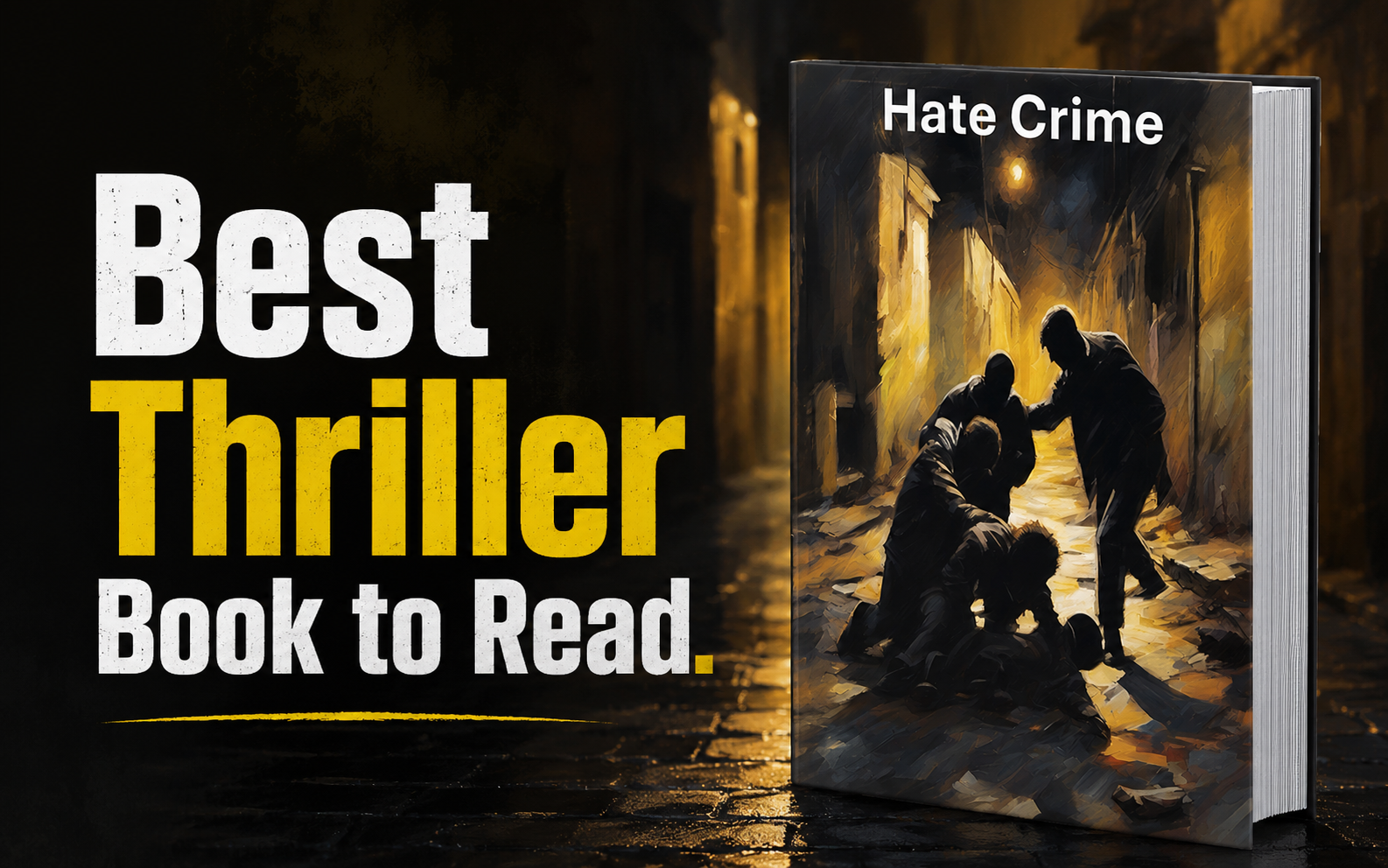
Why Hate Crime Is One of the Best Thriller Books to Read
Thriller readers are a particular breed. We don’t just want a fast-paced plot or a few unexpected twists—we want to feel something. We want our pulse to quicken when the phone rings in the middle of the night. We want to sit on the edge of our seat, dreading and craving the next page in equal measure. If you’re the kind of reader who lives for that adrenaline rush, then it’s time to add a powerful new title to your bookshelf: Hate Crime, a true-story-inspired thriller from P.I.V. Productions that are quickly earning its place among the best thriller books of the year.
What Makes a Thriller Truly Great?
Before we dive into why “Hate Crime” belongs on your reading list, it’s worth taking a moment to talk about what separates a forgettable thriller from one that haunts you long after you’ve turned the final page.
Great thrillers share a few key ingredients. First, they need tension that builds organically, not tension that feels forced or manufactured for shock value. Second, they need characters who feel real—flawed, complicated, and human—so that readers genuinely care about what happens to them. Third, and perhaps most importantly, the best thrillers tap into something deeper than just plot mechanics. They explore fear, grief, justice, and the darker corners of human nature in ways that make readers reflect on the world around them.
This is exactly where “Hate Crime” excels. It isn’t simply a story designed to entertain through twists and turns—it is a story rooted in real emotional weight, drawing from true events to create a narrative that feels disturbingly authentic. That authenticity is what elevates it from a good thriller to one of the best thriller books available today.
The Opening Scene That Grips You Instantly
Every great thriller needs an opening that hooks the reader within the first few pages, and “Hate Crime” accomplishes this with chilling precision.
The story opens late on a Friday night—the Friday before Mother’s Day—in an empty two-bedroom apartment. A phone rings into silence, connecting instead to an answering machine. The voice that comes through is tense, anxious, and pleading: “If anybody is there, please pick up! This is the Albany Police Dept.” The line goes dead after a long, agonizing pause.
Five minutes later, the phone rings again. The same urgent voice repeats the plea. Still, no one answers.
Twenty minutes pass before another phone rings—this time in a darkened bedroom across town. A middle-aged woman wakes, struggles to answer, and finds herself speaking with Sergeant Briner of the Albany Police Department. The question is simple but devastating: “Are you related to Chris Walder?” When she confirms that Chris is her son, the sergeant hesitates before delivering the words every parent dreads: “There has been an accident.”
Why “Hate Crime” Stands Apart From Other Thrillers
The thriller genre is enormous, filled with everything from psychological suspense to crime procedurals to supernatural horror-thrillers. So what makes “Hate Crime” stand out among the noise?
It’s Based on a True Story
Unlike many thrillers that rely purely on fictional inventions, “Hate Crime“ is grounded in real events. This is one of the most powerful storytelling tools available to an author, because it removes the safety net of “it’s just fiction.” When readers know that the pain, fear, and tragedy depicted on the page actually happened to real people, the emotional stakes become exponentially higher.
True-story-inspired thrillers force readers to confront uncomfortable realities rather than escape from them entirely. “Hate Crime” leans into this discomfort intentionally, using the framework of a gripping narrative to shine a light on the very real and very damaging consequences of hate in our society.
It Tackles a Difficult, Timely Subject
As the title suggests, this book doesn’t shy away from its central theme. Hate crimes remain a deeply relevant and painful issue in communities across the country. Rather than avoiding this difficult subject matter, “Hate Crime” confronts it head-on, using the conventions of thriller storytelling to explore how hate can alter—and destroy—lives in an instant.
This is precisely why the book deserves serious consideration on any reading list focused on thrillers that matter. It’s not just entertainment; it’s a vehicle for empathy, awareness, and reflection.
The Emotional Realism of Its Characters
From the very first scene, readers are introduced to characters who feel painfully real. The mother who answers the phone in the dead of night. The husband who wakes beside her, immediately sensing something is wrong. The unnamed officer whose voice trembles with urgency as he tries, again and again, to reach someone—anyone—who can answer.
These aren’t cardboard cutouts designed to move the plot forward. They are written with a level of emotional nuance that makes their fear, confusion, and grief feel tangible. This kind of character work is a hallmark of the best thriller book, and it’s clear from the opening pages that “Hate Crime” was crafted with deep care for its characters’ emotional truth.
Why Hate Crime as a Subject Matter Deserves Literary Attention
Some readers might wonder why a thriller would choose to center itself around something as heavy and painful as a hate crime. The answer lies in the unique power that fiction—and true-story-inspired fiction in particular—has to process societal trauma in ways that pure journalism or statistics cannot.
Fiction Builds Empathy in Ways Facts Alone Cannot
We can read news headlines about hate crimes and feel a fleeting sense of sadness or outrage, but headlines rarely allow us to sit inside the experience the way a well-crafted narrative can. When a story takes the time to develop characters, build tension, and immerse readers in the moment-by-moment unfolding of tragedy, it creates a far deeper emotional connection than a brief news segment ever could.
“Hate Crime” uses this storytelling power deliberately. By placing readers directly into the disorienting confusion of late-night phone calls and unanswered pleas, the book forces an emotional reckoning with the realities of hate-motivated violence—realities that can otherwise feel distant or abstract to those who haven’t experienced them directly.
It Encourages Important Conversations
Books that tackle difficult social issues often spark conversations that might not happen otherwise. Whether it’s discussed in book clubs, shared among friends, or simply sitting on a reader’s mind long after the final chapter, “Hate Crime” has the potential to open dialogue about prejudice, violence, and the urgent need for compassion and accountability in our communities.
It Honors Real Victims and Their Stories
Because “Hate Crime” is rooted in true events, the book carries an inherent responsibility to honor the real people whose experiences inspired it. This adds a layer of gravity to the reading experience. Readers aren’t just following a fictional plot—they’re bearing witness, in a literary sense, to the pain that real victims and families have endured.
This kind of storytelling matters. It ensures that real tragedies are not forgotten or reduced to statistics, but are instead remembered through narratives that preserve their humanity.
What Thriller Lovers Can Expect From Hate Crime
If you’re a fan of thrillers that combine emotional depth with page-turning suspense, here’s what you can expect when you pick up “Hate Crime.”
A Slow-Building, Realistic Tension
Rather than relying on over-the-top action sequences, “Hate Crime” builds its tension through realistic, everyday moments that gradually escalate into devastating revelations. The unanswered phone calls, the late-night confusion, the dawning horror of a parent realizing something is terribly wrong—these are the kinds of details that make the story feel disturbingly real.
A Narrative Rooted in Emotional Stakes
This isn’t a thriller that treats its characters as disposable plot devices. Every scene is infused with genuine emotional stakes, ensuring that readers remain invested not just in what happens next, but in how it affects the people experiencing it.
A Story That Lingers Long After You Finish
The best thrillers don’t end when you close the book—they stay with you. Given its grounding in true events and its unflinching exploration of hate and its consequences, “Hate Crime” is the kind of story that will likely remain on your mind well after you’ve finished reading.
Why You Should Add Hate Crime to Your Reading List Today
If you’ve been searching for thriller recommendations that offer more than just surface-level suspense, “Hate Crime” is a book worth prioritizing. It checks every box that defines an exceptional thriller: gripping pacing, emotionally rich characters, and a narrative grounded in real, consequential events.
For readers who appreciate thrillers that challenge them—not just entertain them—”Hate Crime” represents exactly the kind of literature worth seeking out.
How to Choose Your Next Great Thriller Read
If “Hate Crime” has piqued your interest, here are a few tips for identifying other standout thrillers worth adding to your collection:
Look for stories grounded in real events. True-story-inspired thrillers, like “Hate Crime,” often carry additional emotional weight because they reflect actual human experiences rather than purely invented scenarios.
Prioritize character-driven narratives. The best thrillers invest as much time in character development as they do in plot mechanics. Look for books where you genuinely care about what happens to the people on the page.
Seek out books that tackle meaningful themes. While pure escapism has its place, thrillers that explore real social issues—like prejudice, justice, or systemic failure—tend to offer a more rewarding and thought-provoking reading experience.
Read reviews that mention emotional impact. If multiple readers describe a book as “unforgettable” or say it “stayed with them,” that’s often a strong indicator of quality storytelling.
Final Thoughts: A Thriller With a Purpose
Not every thriller needs to carry a deeper social message to be worth reading—but when one does, and does it well, it deserves recognition. “Hate Crime” from P.I.V. Productions accomplish exactly that. It delivers the suspense, tension, and emotional intensity that thriller readers crave, while also shedding light on the very real and devastating impact of hate-motivated violence.
From its haunting opening scene—a series of unanswered phone calls on the eve of Mother’s Day—to its unflinching exploration of how hate can alter the course of a family’s life forever, “Hate Crime” earns its place among the best thriller books available today.